Flammable gases, vapors, and combustible dust are daily dealt with in industrial plants. In such places, one electrical spark is enough to cause a catastrophic explosion. Flameproof equipment is constructed to withstand such ignitions, but only when they are well maintained.
The most explosion-proof equipment cannot perform its functions even in cases when the seals are exhausted, when the joints are broken, or when no inspections are performed. That is why a systematic equipment inspection checklist is not a choice, but one of the basic aspects of industrial safety compliance.
This manual provides you with a practical, simple-to-follow maintenance system for all hazardous area electrical equipment in your plant.
Industries Where Flameproof Equipment Maintenance is Critical
There is no compromise on maintenance in hazardous areas in the sectors such as:
- Oil & gas refineries and pipelines
- Petrochemical and chemical plants
- Pharmaceutical manufacturing
- Food processing (dust explosion prevention is a must in this case) and grain mills.
- Coating and painting plants.
- Coal mining and coal handling plants.
- Production of fertilizers and agrochemicals
All these industries categorize hazardous areas, which determine the equipment needed and its maintenance. Not only is it unsafe to cut corners, but it can also have serious legal and regulatory repercussions.
Types of Inspection for Flameproof Equipment
Visual Inspection: An inspection of the outside of the equipment on a daily or weekly basis. Inspect physical damage, loose parts, corrosion, and missing labels. No disassembly needed.
Close Inspection: Close inspection is more thorough than a visual check. The enclosure is opened to inspect internal components and flameproof joints. All parts must be verified to ensure they match the original certification and have not been modified. This activity must only be performed by trained and competent personnel.
Detailed Inspection: The most thorough level. Complete disassembly, critical dimensions such as joint gaps measured, and compared to the specifications of the original equipment. The inspection frequency depends on risk and operating conditions and may also be required after any incident.
Flameproof Equipment Maintenance Checklist
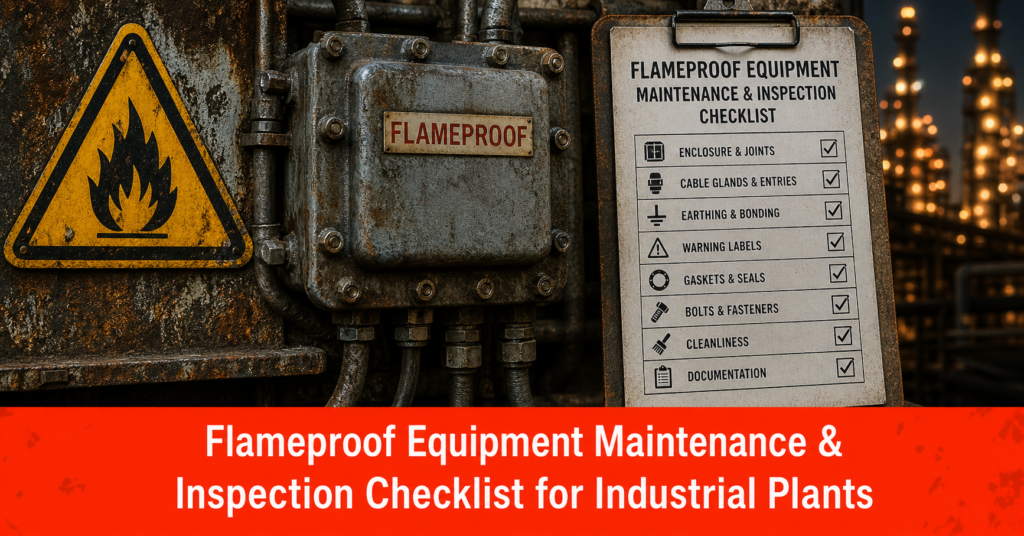
This plant maintenance checklist will help you to organize your inspection schedule of all flame-proof electrical equipment:
Frequency | Task | Responsible |
Daily | Check cracks, physical or corrosion on the enclosure. | Operator |
Daily | Check loose bolts, screws, and cable gland fittings. | Operator |
Daily | Check that warning labels and hazard markings are legible. | Operator |
Weekly | Check flameproof enclosure seals and gaskets. | Technician |
Weekly | Interlocks and safety shutoffs of tests. | Technician |
Weekly | Wipe off equipment surfaces. | Technician |
Monthly | Checking all flameproof joints and gaps in detail. | Sr. Technician |
Monthly | Measure and record earthing/grounding resistance. | Sr. Technician |
Monthly | Check cable glands corroded or worn. | Sr. Technician |
Monthly | Check the integrity of the IP rating of all enclosures. | Sr. Technician |
Periodic | Complete decommissioning and internal examination of all equipment. | Certified Inspector |
As required | Install new gaskets, seals, and fasteners. | Certified Inspector |
At specific intervals | Check the calibration of all sensors and protective devices. | Certified Inspector |
Periodic | Review and update inspection records and certifications | Certified Inspector |
Periodic | Confirm equipment still matches the current hazardous area classification | Certified Inspector |
Critical Areas to Focus During Inspection
- Flameproof Joints and Enclosure Gaps: The flameproof enclosure has internal ignition in the form of tightly controlled gaps. These holes are to be within tight tolerances. Inspect the corrosion, damage, or any debris lodged in the joint.
- Cable Glands and Conduit Entries: The flameproof cable gland is a very significant sealing point. The loose, corroded, or improperly fitted glands may damage the whole enclosure. Inspect all cable entries monthly.
- Junction Boxes and Control Stations: Junction boxes and control stations are flameproof areas that are high-risk areas of loose connections and ingress of moisture. Do not overlook them when making inspection rounds.
- Flameproof Fans: Flameproof fans are those that are exposed to mechanical forces at all times. Inspect the blade wear, bearings, vibration, and overheating each time through the inspection cycle.
- Earthing and Bonding: Periodically check earthing resistance. One of the major causes of electrical accidents in classified areas is poor earthing. Any reading that is not within acceptable limits must be taken action.
Warning Signs & Common Maintenance Mistakes
- Unusual heat or burning smell in the vicinity of any enclosure.
- Rust, corrosion, or discolouration on the surface of equipment.
- Missing or loose bolts and fasteners on covers or cable entries.
- Housing of flameproof enclosures that are broken.
- Torn or squashed gaskets that can no longer perform sealing.
- Condensation or moisture in the enclosure.
Typical errors to be avoided.
- Installation of non-certified parts – never install parts that are not certified to be used in zone 2 hazardous area electrical equipment or the zone.
- Omission of documentation – not recording findings is a severe industrial safety compliance violation.
- Deferring repairs – a minor fault today may result in a big accident tomorrow.
- Access to live equipment – always isolate prior to accessing any explosion-proof enclosure.
Compliance & Documentation Requirements
To remain in compliance with Indian industrial safety standards is to adhere to the standards of the IS/IEC 60079 series, BIS certification standards, and PESO standards where necessary.
You must maintain:
- Checklists are date-stamped, with results and signatures.
- Certificates of conformity of all hazardous area equipment.
- Documentation of any repairs, replacements, or alterations.
- Dangerous area classification plans of your facility.
- Calibration records and staff training records.
Retain all records for at least five years. They will be requested by regulatory bodies and insurance auditors.
Best Practices & Practical Maintenance Insights
Train your staff: All the technicians involved in handling hazardous area electrical equipment should be trained on how to conduct inspections and updated on the same every year. People are important to equipment reliability.
Always replace with authorization: Only replace explosion-proof equipment with certified replacement parts. The certification of the equipment can be nullified by a single faulty component.
Digital inspection system: Digital tools are much easier to schedule, record, and audit your equipment inspection checklist compared to paper-based systems.
Take action on discoveries: When a defect is detected during an inspection, remedy it as soon as possible. Create a schedule of building repairs right into your preventive maintenance schedule.
Conclusion
Flameproof equipment eventually safeguards your plant and your people, but only when they are in good condition. What makes your hazardous area electrical equipment certified and your plant safe is a regular inspection program, trained staff, and good documentation.
Regardless of whether you are operating an oil refinery, a chemical plant, or a food processing unit, the principles of industrial equipment maintenance remain the same. Inspect regularly. Document everything. Do not postpone a repair.
In certified explosion-proof enclosure India solutions, such as junction boxes, cable glands, control stations, and fans, Bharat Flameproof offers industry-compliant products that are designed to suit Indian conditions.
FAQs
They are alluding to the same thing. “Flameproof” (Ex d) is the IEC/European term. “Explosion proof” is commonly used in North American standards. Both refer to enclosures, which are expected to contain an internal explosion without setting the air around on fire.
No. The appropriate Ex certification of that zone should be on Zone 2 hazardous area electrical equipment. The normal equipment is not appropriate and cannot be used in the classified hazardous areas safely.
It may nullify the Ex certification of the equipment and weaken the flameproof joint. Any maintenance or repair work on hazardous area equipment should always be done using manufacturer-approved and certified components.
You require inspection registers, equipment certificates, repair records, hazardous area classification drawings, calibration records, and training logs. These should be subject to inspection by PESO, factory inspectors, and insurers.