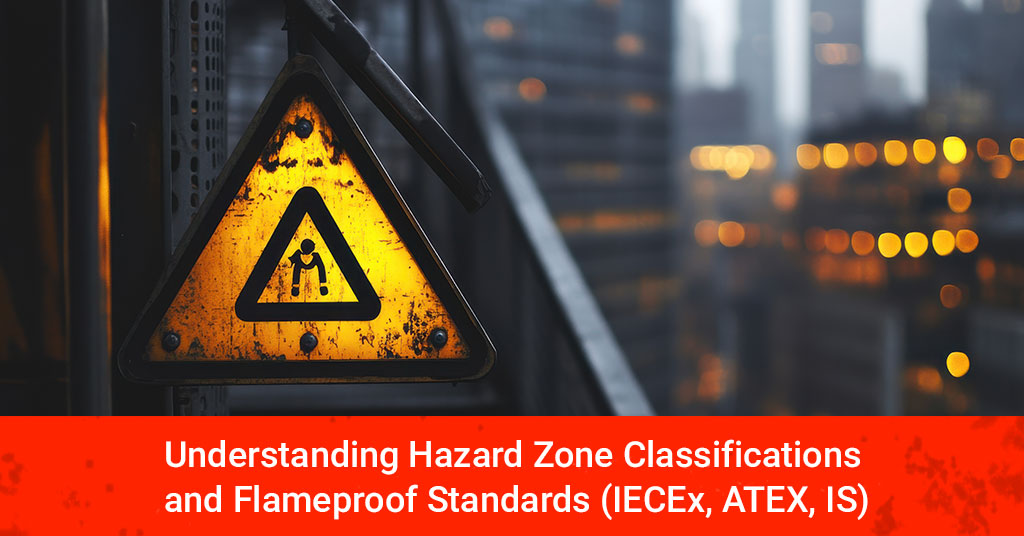
A single spark in the wrong place might destroy a whole building. Every day, businesses in the oil and gas, pharmaceutical, chemical, and manufacturing industries have to deal with combustible gases, vapours, and dust. The correct flameproof equipment in the right place is often the only thing that separates safety from calamity. This blog explains how hazard categories function and what rules regulate them.
What Is Hazardous Area Classification?
There are zones in hazardous places based on how often explosive atmospheres show up.
For vapours and gases:
- Zone 0: An explosive atmosphere is always present or for lengthy periods of time.
- Zone 1: An explosive environment is likely to happen during normal operation.
- Zone 2: There is a low chance of an explosive atmosphere, but it is feasible for short periods of time.
For dust that can catch fire:
Use gas zone risk logic for Zones 20, 21, and 22.
Classify flameproof equipment, such as explosion-proof HVAC systems, junction boxes, and exhaust fans, before installing it. Unless you classify your zones appropriately, your equipment will be at risk.
Why Flameproof Standards Matter
Standards are in place to make sure that equipment doesn’t set off nearby explosive atmospheres. Any internal ignition must be contained within a flameproof flood lamp, flameproof cable gland, or explosion-proof panel. There is no way to be sure of this without verified standards. Certified equipment also helps businesses stay out of trouble with the law and avoid being sued.
Understanding IECEx Certification
The International Electrotechnical Commission (IEC) certifies explosive atmosphere equipment worldwide as IECEx. It was founded in 1996 and has equipment, service facilities, and staff skills.
Most of the world, including China, Australia, India, and the Middle East, knows about IECEx. Accredited IECEx Certification Bodies (ExCBs) do the testing and give out a Certificate of Conformity after a thorough review. IECEx accreditation is the best way to go for international projects that need pharma HVAC systems or explosion-proof ventilation.
Understanding ATEX Standards
Two European Union directives are the source of ATEX. ATEX 114 sets rules for how to design and make equipment. ATEX 153 keeps workers safe in places where there are explosives. The European Economic Area is a coordinated effort by all of them.
Equipment might be protected on one, two, or three levels. Zone 0 and Zone 20 get the most protection from Category 1. CE marking, equipment group, category, and gas or dust specification are all part of ATEX marks. If you want to sell cleanroom HVAC or explosion-proof control panels to Europe, you need to have ATEX certification.
Understanding Indian IS Flameproof Standards
The flameproof certificates are issued by the Indian Bureau of Standards (BIS). The international standards followed by BIS, IS/IEC 60079-0 and 60079-1, are the same as those followed by the IEC.
In Indian establishments, flameproof panels, explosion-proof HVAC, and other dangerous area equipment must be IS-certified by law. Indian oil refineries, chemical plants, and pharmaceutical firms must use IS-certified equipment. Installations may not gain government approval without it.
IECEx vs ATEX vs IS: Key Differences
| Feature | IECEx | ATEX | IS (India) |
| Origin | International (IEC) | European Union | India (BIS) |
| Mandatory? | Voluntary (law in 5 countries) | Mandatory in EEA | Mandatory in India |
| Categories | Protection levels a, b, c | Categories 1, 2, 3 | Follows IEC structure |
| Certification Body | ExCB | Notified Body | BIS |
Choosing the Right Flameproof Equipment for Your Hazard Zone
The equipment’s protection must match the zone’s risk. Zone 0 or 20 needs the best security. Zone 2 or 22 lets you use equipment that isn’t as good. Before buying flameproof exhaust fans, explosion-proof panels or cable glands, check their credentials. Check if your project needs IECEx, ATEX, or IS certification based on location and client needs.
Common Mistakes in Hazard Zone Compliance
Putting Zone 2-rated equipment in Zone 1 environments is a big mistake. Another is using explosion-proof control panels that haven’t been approved or that are marked incorrectly. Many facilities often forgo zone categorisation altogether before installation, which adds hidden concerns.
Conclusion
Restriction of activity, property, and persons occurs in hazardous zones. For certification by IECEx, ATEX, or IS, it is vital to begin with the right equipment. Certified explosion- and flameproof panels and control stations are made by the reliable Bharatflameproof, which Mumbai and businesses all across India can count on. Their products are perfect for your business. All potentially hazardous objects must be certified immediately following remodelling or installation.
FAQs
If everything works in Zone 1, the atmosphere may burst. Zone 2 is feasible for short bursts, though unlikely.
Yes, IS standards are compatible with IEC standards, and India acknowledges IECEx.
The European market is ATEX’s primary focus. We require IS certification from BIS for the majority of our Indian projects.