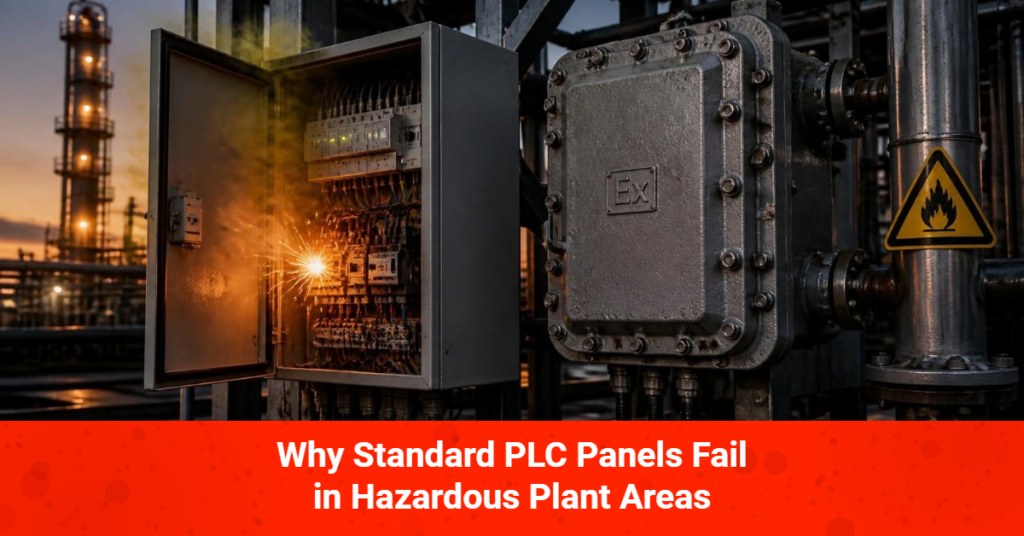
Flammable gases, vapors, and combustible dust are used in chemical plants, refineries, and pharmaceutical units. A spark or a hot surface in these conditions can lead to an explosive event with devastating consequences.
Typical electrical panels are not designed to withstand such treatment. Small sparks are generated naturally in normal enclosures, which are composed of switches, relays, and microprocessors. The surrounding dangerous gases can also penetrate into the normal panel. When gas comes in contact with an internal spark, an explosion will happen immediately.
Special flameproof PLC panels are required to ensure that your plant, equipment, and personnel are safe. These tough enclosures contain internal explosions and prevent flames from escaping into the surrounding environment.
What Is a Flameproof PLC Panel and How Does It Differ from Standard Enclosures?
A flameproof PLC panel (also referred to as an explosion-proof PLC panel) is a rugged enclosure that is able to withstand an explosion that occurs inside it.
When people think of explosion-proof enclosures, they tend to believe that they will not allow gases to enter. That is a myth. The flameproof enclosures are actually made to permit gas to enter. Their extremely thick cast aluminum or stainless steel walls, however, are sturdy enough to withstand any pressure when this gas catches fire within.
In addition, the arrangement of precision wide flanges (called flame paths) helps to cool hot gases as they are expelled from the box. When the gas reaches the outside air, it has cooled sufficiently that it cannot burn the air’s vapor.
The typical PLC panel box is constructed from thin sheet metal meant to keep dust and rainwater out of the box. A hazardous location PLC panel, by comparison, however, is constructed of thick cast metal, special seals, and flame paths to keep your facility safe.
Key Design Elements
To design a reliable flameproof PLC panel, many components both in and around the PLC need to be carefully considered:
- Flameproof enclosures are made of thick cast aluminum (LM6) or heavy stainless steel, and are designed to withstand high internal pressure with Ex d protection ratings.
- Cable Entries: Ordinary plastic glands will break because of the pressure. For hazardous locations, use certified flameproof double-compression cable glands or barrier glands to seal all entry points.
- Internal Layout: Ensure that the layout of PLCs, relays, and power supplies does not create thermal hot spots. Sufficient spacing prevents crowding out and provides for stable operation.
- Heat Accumulation: Sealed cast enclosures heat up rapidly. Sensitive electronics are protected by using internal heat sinks, external cooling fins, or special air conditioning systems.
How to Size and Select a Flameproof PLC Panel
When selecting a flameproof PLC panel, it’s more than just about measuring your PLC rack. Take these key factors into account when you’re making your choice:
- Hazardous Zone Classification: Determine if your installation area is a Zone 1, Zone 2, Zone 21, or Zone 22.
- Gas Group and Temperature Class: Check the Gas Group (IIA, IIB, or IIC) and T-rating (typically T4, T5, or T6) for the gases in the panel.
- Internal Component Volume: Make sure that the PLC panel box provides sufficient interior space to accommodate the PLC CPU, I/O modules, power supplies, and the terminal blocks, with sufficient space for adequate heat flow.
- Future Expansion: Make the enclosure 20% larger than the I/O cards and relays you currently have to accommodate future expansion.
Integrating VFDs and Automation Components Inside a Flameproof Enclosure
During operation, Variable Frequency Drives (VFDs) produce a lot of heat. Thermal issues are very problematic when a VFD is placed inside a sealed VFD panel box.
Heat management is the prime concern when you’re creating a flameproof VFD panel. A heavy cast VFD enclosure retains heat within the enclosure as opposed to a standard enclosure, which dissipates the heat through thin metal sheets.
To install VFDs in flameproof enclosures:
- Use large enclosures with external heat dissipation fins.
- Mount directly to the wall of the inner enclosure with thermal interface materials, with the use of mount VFD.
- Use internal fans for the circulation of air to remove pockets of heat around sensitive PLC components.
- Choose VFDs that are designed to operate in a high ambient temperature environment.
Installation Best Practices and Common Mistakes to Avoid
The best design of the explosion-proof PLC panel will be of no use if it isn’t mounted properly. On-site best practices to follow:
- Check Flame Paths: Do not paint or scratch/machine the surface of flame path surfaces during installation. Use anti-corrosion grease to prevent rust.
- Always install certified double-compression flameproof glands: use Certified Glands. Never leave open, unsealed cable entries.
- Grounding: Secure internal and external earthing terminals to avoid static build-up.
- Do not add Uncertified Modifications: Do not add new holes or make modifications to a cast enclosure on site. This renders safety certifications null and void and poses a significant hazard.
Compliance and Certification Requirements (IS/IEC 60079, PESO)
The national/international safety standards must be strictly adhered to in India for hazardous area electrical equipment:
- IS/IEC 60079 Series: These cover the design, testing, and production of electrical apparatus for use in explosive atmospheres (Ex d flameproof protection).
- PESO Approval: All electrical equipment installed in Indian hazardous locations must be PESO-approved. When purchasing an enclosure, be certain that the manufacturer has a true PESO Compliance document.
Conclusion
You need to know how to protect your industrial facility from ignition hazards, and that’s where you will find the solutions with certified Automation Enclosures that have been designed for extreme conditions. Typical panels are not pressure-resistant for hazardous areas. Bharat Flameproof ensures that your control systems meet the safety standards of India and operate at their best. Delve into our flameproof PLC panel enclosure models, or improve your drive systems with a flameproof VFD panel enclosure. Talk with our engineering experts today to design a powerful solution to suit your facility.
FAQs
A: A flameproof panel resists and prevents an explosion from spreading inside the panel. In an intrinsically safe system, the electrical energy is limited in the first place so that the sparks may not generate enough heat to cause the surrounding gas to burn.
A: Yes, but a suitable VFD enclosure with heat dissipation has to be used. VFDs will keep on tripping because they will overheat when standard enclosures are used without any thermal management measures.
A: PESO approval ensures electrical equipment complies with the Indian safety standards for hazardous areas, ensuring 100% legal compliance and workplace safety.